Buying land and building a house in Colorado Springs takes more planning than most people expect, especially with El Paso County's permit timelines, engineered foundation requirements, and the wide range of lot types across the region. Serving the Colorado Springs metro from our Monument office, Ivory Ridge Custom Construction has walked homeowners through every step, from finding the right parcel to handing over the keys on a finished custom home.
If you want a builder who knows this ground, our team at Ivory Ridge Custom Construction is ready to guide you through it. Ready to find your land and start building? Let us help you map out the full process.
Key Takeaways
- To buy land and build a house in Colorado Springs, you need to evaluate zoning, utilities, and soil conditions before you close on a parcel.
- El Paso County permit review for a new single-family home can take 6 to 14 weeks depending on plan complexity.
- Colorado's Front Range soils vary widely, and most custom home sites require an engineered foundation design.
- A local builder involved early in your land search can prevent costly mistakes before construction begins.
- Construction loans work differently than standard mortgages, and your lender and builder need to coordinate from the start.
Why the Order of Your Decisions Matters in Colorado Springs
Building a custom home on your own lot is not like buying an existing house. You are making two major financial decisions at once, and the order in which you make them matters. Across the El Paso County area, parcels range from in-town infill lots to multi-acre tracts in Black Forest and Falcon, each with its own utility access, zoning rules, and permitting requirements. Skip the due diligence early, and you will pay for it in budget overruns and schedule delays later.
What follows covers every stage of a land-to-home project in the region: evaluating a parcel, structuring your financing, assembling your team, and moving through the permitting process. Based in Monument and serving the greater Colorado Springs metro, our team has completed custom homes across Monument, Gleneagle, Black Forest, and Falcon.
If you are not sure where to start, browse our available homesites in Colorado Springs to see lots already vetted for buildability. The steps you take before breaking ground determine whether your project finishes on time and on budget.
What Should You Check Before Buying Land to Build a House?
Before you buy land to build on, verify the parcel's zoning, utility access, soil conditions, easements, and legal road access, because each one directly affects what you can build and what it will cost to make the site buildable. You are buying potential, and potential comes with conditions. Know exactly what a parcel near Monument, Black Forest, or Falcon includes before you commit.
Raw Land vs. Improved Lots
Raw land has nothing on it. No utilities. No road access. No grading. Parcels in Black Forest and Falcon often fall into this category, and they require a private well, septic system, and utility trenching before a foundation can be poured. Improved lots, like many found in Monument and Gleneagle, typically have water, sewer, gas, and electric stubbed to the lot line already.
That gap in convenience is also a gap in cost. Here are the major site-work expenses raw land buyers often face:
- Well drilling: $10,000 to $25,000 or more depending on depth
- Septic design and installation: $15,000 to $30,000
- Utility trenching and road access: $10,000 to $25,000
Total site-work costs on raw land can run $30,000 to $80,000 before a single foundation form is set. Budget for that before you fall in love with the acreage. If you want to skip the guesswork on site selection, our design-build contracting services include early-stage lot evaluation so you know what you are getting into.
Zoning, Covenants, and HOA Rules
Zoning controls what you can build and how big it can be. In the El Paso County area, classifications like RR-5, A-35, and R-1 dictate minimum lot sizes, setbacks, and whether you can add an outbuilding or accessory dwelling unit. Building on your own parcel without reading the zoning first is a costly mistake.
Subdivision covenants add another layer. They can restrict exterior materials, minimum square footage, roof pitch, and outbuilding placement. Pull the title commitment and review the Schedule B-2 exceptions before you sign. That document will show you easements, deed restrictions, and covenant limitations that do not appear in the listing description.
Soil, Slope, and Site Conditions
The Front Range has two very different soil profiles. Lower elevations tend to have expansive clay soils that swell when wet and shrink when dry. Higher elevations around Monument, Black Forest, and Woodland Park typically have decomposed granite and rocky substrate. Both conditions affect your foundation design and your budget.
Expansive clay soils require an engineered foundation, often a structural slab or pier-and-grade-beam system. A geotechnical report tells you exactly what you are dealing with. That report typically costs $1,500 to $3,500. Order it before you finalize the purchase contract, not after. Buyers who skip this step can face foundation redesign costs that far exceed what the report would have cost.
Where to Find Land for Sale Near Colorado Springs
Most buyers start with a Zillow search and quickly realize that raw land listings are scattered, incomplete, and often missing the details that actually matter when you are searching for a buildable site. Here is where we tell our clients to look, and what to watch for once they find something promising.
MLS Listings, County Records, and Builder-Owned Homesites
There are three reliable channels for finding land in this region. First, the Colorado MLS through a land-specialist buyer's agent. A general residential agent may miss zoning nuances or utility availability details that a land-focused agent will catch immediately. Second, public assessor records.
The El Paso County Assessor's parcel search at parcelsearch.elpasoco.com lets you look up parcels by type, owner, and acreage, which is how buyers find off-market tracts before they ever hit a listing site. Third, builder-owned homesite portfolios, where parcels are already evaluated for utility access, zoning, and constructability before you ever step in.
Once you have a parcel under contract, our new home construction team takes it from soils report through final walkthrough. You can view available homesites in Monument and the Colorado Springs area that our team has already vetted. One current example is 17162 Jackson Ranch Ct in Monument, a builder-reviewed parcel ready for the custom home building process.
Which Communities Have the Most Available Parcels?
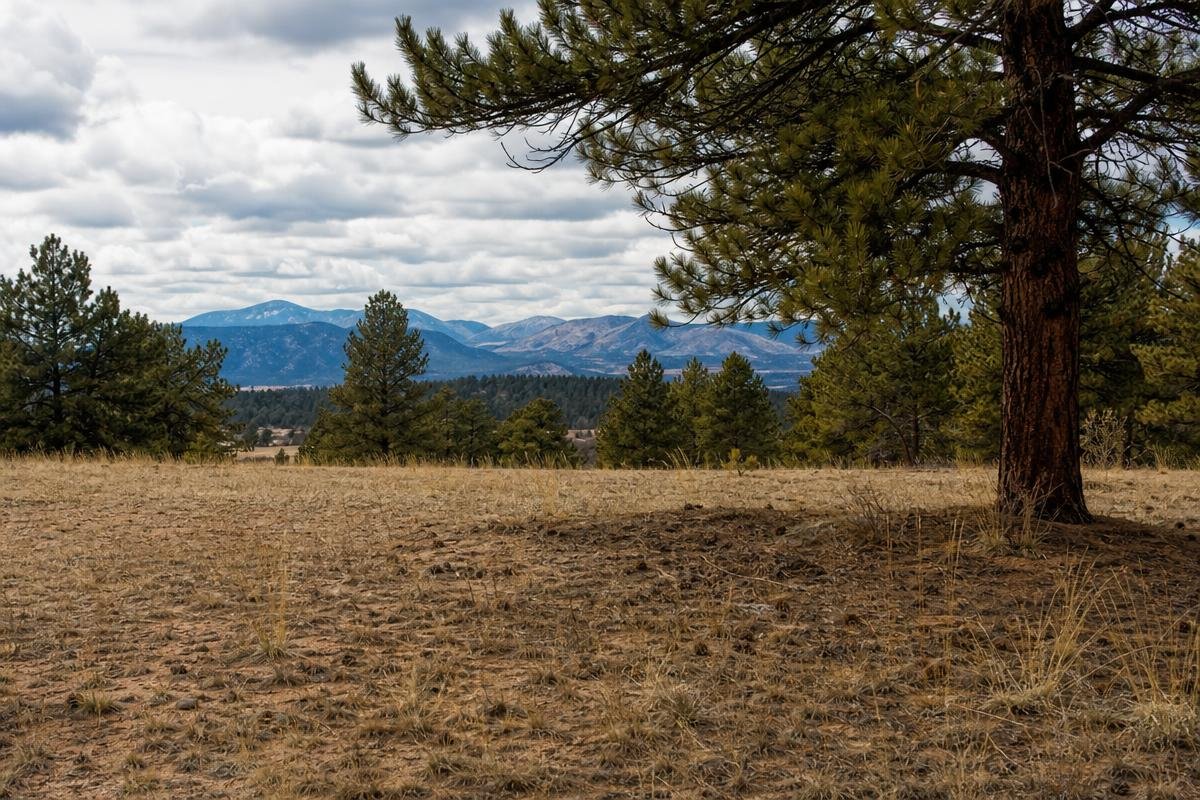
Black Forest sits northeast of the Springs with dense Ponderosa pine cover and parcels running from 2.5 to 35 acres. Most require a private well and septic system. If you want acreage and rural character, this is your best starting point. Our custom home building work in Black Forest reflects how different that terrain is from a standard subdivision lot.
Monument and Gleneagle offer a mix of improved subdivision lots and larger parcels with mountain views, and the Lewis-Palmer D-38 school district draws a lot of families here. Falcon, east of the city, adds a faster-growing mix of subdivision lots and rural acreage at generally lower land cost. Woodland Park pulls buyers who want a true mountain setting in Teller County. Each area has its own permit timelines, utility infrastructure, and soil conditions.
Red Flags When Evaluating a Parcel
We have walked a lot of sites over the years. These are the warning signs that should stop you before you commit to the wrong piece of ground.
- No perc test or soils report from the seller. Without one, you do not know if the ground will support a septic system or what foundation engineering will cost.
- Easements bisecting the buildable area. A utility or access easement through the center of a parcel can eliminate your best building envelope entirely.
- FEMA flood zone designation. Zone AE or AO designations on Front Range parcels add insurance costs and restrict what you can build and where.
- Deed restrictions limiting square footage. Some parcels carry covenants that cap home size below what you are planning. Read them before you sign.
- No legal road access or recorded easement. A landlocked parcel with no recorded access easement is a legal problem that can take years and significant money to resolve.
How to Finance a Land-to-Home Project in Colorado
Financing a parcel and a custom home build is not the same as getting a standard mortgage. There are a few different loan structures, and the one you choose affects your costs, your timeline, and how early you need a builder involved. Here is a plain-language breakdown of how it works in the El Paso County area.
Construction Loans vs. Land Loans
A raw land loan lets you purchase a parcel before any construction plans exist. Lenders treat vacant land as higher risk, so expect a larger down payment, typically 20 to 50 percent, and a shorter loan term of two to five years. Most custom home buyers in the Monument and Black Forest area move past this structure quickly because a construction loan is usually the more practical path.
A construction loan covers both the land purchase and the build under one instrument. Funds are released in stages called draws as construction milestones are completed. This approach reduces your closing costs and keeps the process simpler. If you are researching parcels now, our available homesites near Colorado Springs are already vetted for buildability, which can speed up lender approval.
One-Time-Close Construction-to-Permanent Loans
This is the loan structure we see most often with our clients. A one-time-close loan converts automatically to a 30-year mortgage once your certificate of occupancy is issued. You close once, lock your permanent rate at the start, and avoid a second set of closing costs entirely.
The alternative is a two-time-close structure.
You close on the construction loan, then refinance into a permanent mortgage when the build is done. That means two closings and two sets of fees. Ask your lender specifically about one-time-close options before you commit to any loan product.
How Lenders Evaluate Land and Construction Projects
Lenders look at four things when you apply for a construction loan. First, the appraised as-completed value of the finished home. Second, your builder's credentials, license, insurance, and project history. Third, the construction contract and draw schedule. Fourth, your own credit, income, and cash reserves.
One detail that surprises many buyers: some lenders in this region require a signed builder contract before they will approve a construction loan. That is a real reason to engage your builder early. Our design-build services include the documentation lenders typically request, and we are glad to refer you to lenders we have worked with on previous builds.
Want a builder who knows El Paso County financing and permitting? Schedule a free consultation before you sign on a parcel.
Who You Need on Your Team Before You Break Ground
Most buyers think you hire a builder after you buy land. That is one of the most expensive assumptions in the custom home building process. The right team assembled before you close on a parcel saves you from costly surprises: a lot that cannot support your floor plan, a septic setback that eats your buildable area, or a site-work budget that blows your overall numbers. Build your team first. Then buy the land.
Why Choosing a Builder First Saves Money
A builder can walk a parcel with you before you sign anything. We look at slope, soil conditions, access, utility availability, and whether your target home design actually fits the lot. That pre-purchase site consultation is built into our design-build process. Clients who come to us before they buy avoid the most common and most expensive mistakes. Engaging a builder early is not a commitment to build. It is due diligence.
The Land Specialist, Architect, and Engineer
You need three additional professionals on your team before permits can move forward.
- Land-specialist real estate agent. A general residential agent is not enough. You need someone who understands water rights, access easements, and rural utility issues specific to parcels in Black Forest, Falcon, and Monument. Those details rarely show up in a standard listing.
- Architect or residential designer. El Paso County requires construction drawings for a building permit. Your architect produces those drawings and coordinates with the engineer on foundation and structural requirements.
- Civil or structural engineer. Front Range soils require a geotechnical report in most cases. On any parcel in Black Forest or Falcon not served by municipal sewer, a licensed engineer must also design the septic system before a permit application is complete.
How Long Does It Take to Get a Building Permit in El Paso County?
Plan review for a new single-family home in El Paso County currently runs six to fourteen weeks depending on plan complexity and submission volume. The permitting sequence follows a defined path, so plan for it from day one.
- Site plan review and zoning confirmation.
- Building permit application with construction drawings, a soils report, and energy compliance documentation under the 2021 IECC.
- Inspections at foundation, framing, rough mechanical, electrical, and plumbing, insulation, and final.
Factor that timeline into your land-to-move-in schedule from the start. Clients who do not are consistently surprised by it.
The Custom Home Building Process, From Land Closing to Move-In
A lot happens between the day you close on your lot and the day you get your keys. The custom home building process in this region moves through three distinct phases, each with its own timeline, inspections, and decisions. Knowing what to expect keeps you confident and helps us keep the project on time and on budget.
Phase 1 - Design, Permits, and Site Preparation
This phase is where your vision becomes a set of permitted construction documents. We finalize your floor plan, exterior elevations, and material selections, then submit for building permits. If your lot has Ponderosa pine cover, site clearing must be coordinated with applicable vegetation management guidelines before grading and utility trenching begin.
Plan for this phase to run 3 to 6 months in total. Our design-build contracting services keep design and permitting moving together rather than in separate silos.
Phase 2 - Foundation Through Framing and Systems Rough-In
Once the site is prepped, we pour the foundation. Expansive soils in this region require engineered solutions, either a structural slab or a pier-and-grade-beam system, depending on what the soils report specifies. Framing follows, then roof, windows, and exterior doors. After that, our mechanical trades rough in HVAC, plumbing, and electrical.
At roughly 6,800 feet elevation, HVAC systems must be sized for cold winters and significant temperature swings. Framing and rough-in inspections occur during this phase before walls close.
Phase 3 - Finishes, Final Inspections, and Your Walkthrough
Insulation goes in first, then drywall, finish carpentry, cabinetry, flooring, tile, paint, and fixtures. Landscaping rough-grade wraps up the exterior. The home must pass a final energy inspection under the 2021 IECC requirements before a Certificate of Occupancy is issued by the building department. We then walk through the completed home with you to document any punch-list items.
Customers consistently tell us there are no surprises on quality or budget by the time we reach this walkthrough. If you want to see available lots already suited to this process, browse our available homesites.
Building in Monument and Surrounding Communities: What Makes This Region Different
Each community in this region has its own terrain, its own permit office, and its own lifestyle character. Where you build shapes everything from your foundation design to your school district. Here is what you need to know about each area before you commit to a parcel.
Monument and Gleneagle
The I-25 corridor north of the city sits at roughly 6,800 feet. That elevation brings Ponderosa pine views, cooler summers, and Pikes Peak on your western horizon. Families building custom homes here frequently cite the Lewis-Palmer School District (D-38) as a primary reason for choosing this corridor. The rocky, decomposed granite substrate at this elevation requires an engineered foundation. Plan for that cost from the start.
Gleneagle, just south along the corridor, offers established neighborhoods with similar terrain and easy access to the Air Force Academy. Lots here tend to be smaller than rural acreage communities, but the proximity to amenities and the community feel attract buyers who want space without full rural isolation. If you are exploring available land in this area, take a look at our available homesites near the Colorado Springs area.
Black Forest and Falcon - Acreage Living
Northeast of the city, dense pine cover and large parcels define the character of this community. Lots commonly run from 2.5 acres to 35 acres. Most require a private well and a septic system. Well drilling and septic design add time and cost to your project, so build both into your schedule and budget before you close on land.
Our team has extensive experience as a custom home builder in Black Forest and can help you coordinate those rural utility requirements early. Falcon sits to the east at lower elevation with less tree cover and a faster-growing mix of subdivision lots and rural acreage. It attracts buyers who want space and privacy at a generally lower land cost than the pine communities to the north.
Castle Rock and Woodland Park - County Nuances
Our service area extends beyond El Paso County. Building in the Castle Rock area, in Douglas County, means working with a separate building department, its own permit fees, and its own inspection schedule. Our work as a custom home builder in the Castle Rock area means we know that jurisdiction well.
The Woodland Park area falls under Teller County, which adds mountain-specific engineering requirements including snow load calculations and wind exposure ratings. Confirm your parcel's county jurisdiction before you hire any consultants. Engineering requirements and permit timelines vary significantly between these counties, and that difference affects your overall project budget.
Frequently Asked Questions
How long does the full process take from land search to move-in?
Plan for 18 to 30 months from the start of your land search to the day you move in. Land search and due diligence typically takes 1 to 3 months. Design and permitting adds another 3 to 6 months, and permit review times in the area can run 6 to 14 weeks depending on plan complexity and submission volume. Construction itself runs 10 to 16 months depending on home size and finish level. Starting early with a builder and a lender gives you the best chance of staying on schedule.
What does land cost, and how much will the build run?
Land prices vary widely based on location, acreage, and whether the parcel is raw or already improved with utilities. Construction costs depend on finish level, site conditions, foundation requirements, and home size. We do not publish a single per-square-foot figure because the variables are too significant to generalize honestly. Request a detailed project estimate early in your planning process. That conversation is free and gives you a real number to work from.
What are my financing options for buying land and building a custom home?
You have two main paths to finance land and build a house. A land loan lets you purchase the parcel before construction plans are finalized, but it typically requires a larger down payment and carries a higher interest rate. A construction loan covers both the land purchase and the build in a single closing, which is the more common route for buyers who are ready to move forward with a builder.
We recommend working with a lender who specializes in construction financing in the region, as the process differs meaningfully from a standard mortgage.
What is the difference between a custom home builder and a production builder?
A production builder constructs homes from a fixed set of floor plans in a planned subdivision with limited options for customization. A custom home builder designs and builds each home individually on a client-selected lot, with full control over floor plan, materials, finishes, and features. Our design-build contracting services are built around your vision, not a catalog.
Custom builds typically cost more per square foot, but you get a home that reflects your lifestyle and the character of the community you are building in.
Does the builder help with the land search and permitting, or is that my responsibility?
We handle both. Our team maintains a portfolio of available homesites in Monument and the Colorado Springs area that are already vetted for constructability. We also evaluate any parcel you are considering, assess site-work requirements, and manage permitting coordination from plan submission through final inspection. You do not have to figure that out on your own.
Ready to find the right parcel and build the home you have been planning? Our team evaluates land, coordinates permits, and manages every phase of construction across the Gleneagle area, Castle Rock, Woodland Park, and the surrounding communities. Call us at (719) 426-1130 or visit our office at 7222 Commerce Center Dr Suite 220, Colorado Springs, CO 80919 to start the conversation.
Ready to Get Started with Ivory Ridge Custom Construction?
Call (719) 426-1130 to speak with our team directly. We're ready to answer your questions, walk you through your options, and help you find the right solution for your needs. Whether you're just starting to plan or ready to move forward, we'll make the process simple and stress-free. Reach out today and let's talk about how we can help.