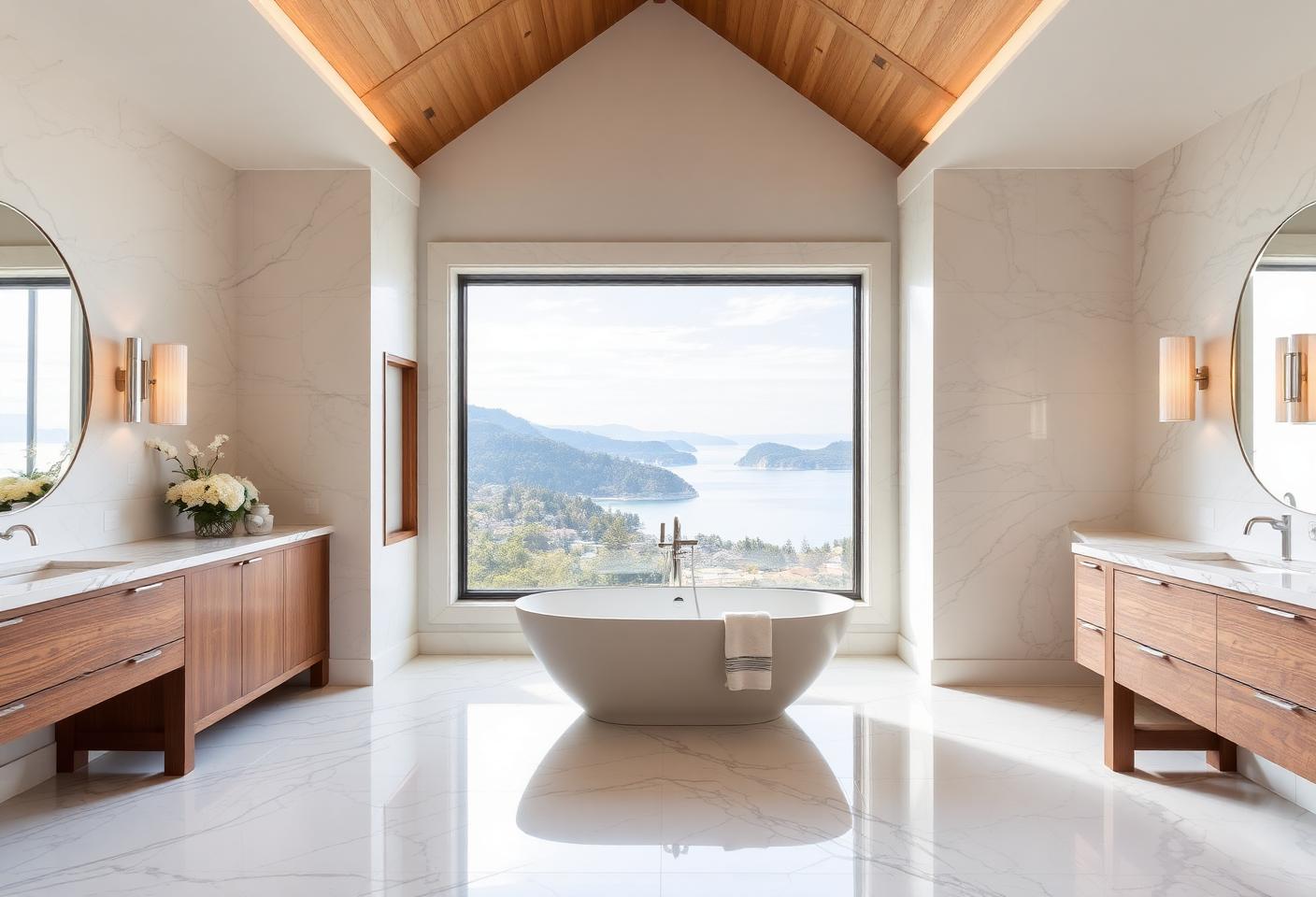
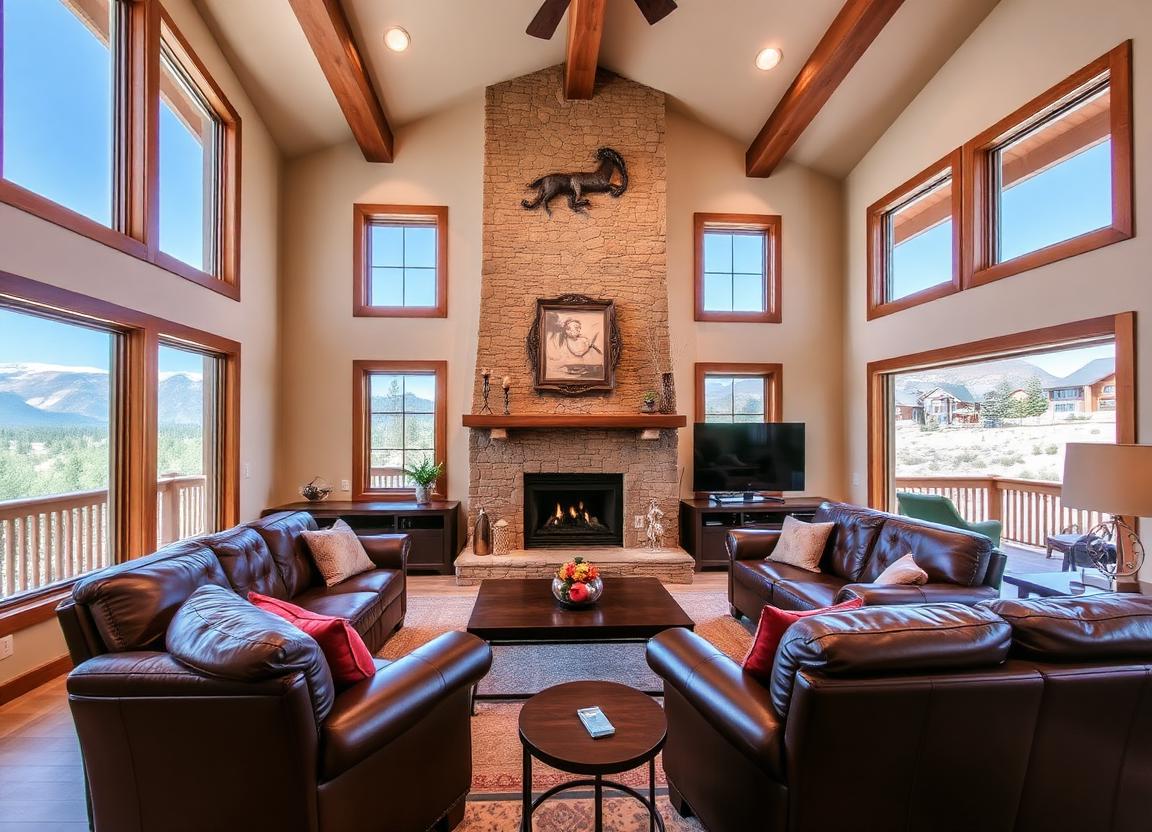
If you are considering building a custom home along Colorado's Front Range, the first question is almost always the same: what is this actually going to cost? The honest answer is that custom home costs in Colorado vary widely, but the ranges are far more predictable than most homeowners expect once you understand the drivers behind them. If you are ready to talk specifics, see our custom home building services in Colorado Springs.
This guide breaks down what custom home construction costs in Colorado Springs, Monument, Castle Rock, Black Forest, and the surrounding communities in 2026, based on the projects we are quoting and building today. It covers line-item budgets, the local conditions that move numbers up or down, how construction financing works, and how building compares to buying an existing home.
Key Takeaways
- Mid-range custom homes on the Front Range run $425 to $575 per square foot for construction in 2026, before land.
- A 3,500 square foot mid-range custom home typically lands between $1.5M and $2.0M for vertical construction alone.
- Land, tap fees, septic, wells, driveways, and landscaping commonly add $200K to $1M or more on top of construction.
- Site conditions, finish level, and structural complexity account for most of the variation between two homes of the same size.
- Construction-to-permanent loans fund the build through a draw schedule tied to completed construction milestones.
- Budget a 10 to 15 percent contingency and lock major selections before framing to keep change orders under control.
Custom Home Cost Per Square Foot in Colorado for 2026
For a true custom home, meaning a one-off plan built for your family on your lot rather than a production or spec build, expect the following all-in construction costs. These figures cover the vertical structure, finishes, and standard site work, and they exclude land:
| Tier | Cost per sq ft | What that buys | 3,500 sq ft total |
|---|---|---|---|
| Entry-level custom | $325 to $425 | Simple footprint, stock cabinetry, quartz counters, LVP and carpet, builder-grade trim | $1.14M to $1.49M |
| Mid-range custom | $425 to $575 | Semi-custom cabinetry, hardwood, tile showers, upgraded windows, some structural detail | $1.49M to $2.01M |
| High-end custom | $575 to $800 | Full custom millwork, natural stone, steel and glass elements, premium appliances | $2.01M to $2.80M |
| Luxury / mountain-modern | $800 to $1,200+ | Complex geometry, large window walls, timber and stone exteriors, bespoke everything | $2.80M to $4.20M+ |
A 3,500 square foot mid-range custom home in Colorado Springs in 2026 typically lands between $1.5M and $2.0M for construction alone. The same home built to luxury standards with extensive site work, high-end millwork, and premium finishes can easily reach $2.8M or more. Two identical floor plans can differ by 40 percent on cost purely from finish level and site conditions, which is why per-square-foot quotes should always be treated as a starting point rather than a promise.
Detailed Custom Home Cost Breakdown by Line Item
The table below shows how a mid-range 3,500 square foot custom home budget of roughly $1.75M distributes across trades. Percentages shift with site complexity and finish level, but this is a realistic baseline for the Colorado Springs market. When we prepare an estimate for a new custom home, you receive this level of detail before you sign anything.
| Line item | % of construction | Typical cost |
|---|---|---|
| Site prep, excavation, and grading | 5 to 9% | $85,000 to $160,000 |
| Foundation and engineered structural slab | 6 to 9% | $105,000 to $160,000 |
| Framing, sheathing, and structural steel | 13 to 17% | $225,000 to $300,000 |
| Roofing (Class 4 impact-resistant) | 3 to 5% | $50,000 to $90,000 |
| Windows and exterior doors | 5 to 8% | $85,000 to $140,000 |
| Exterior envelope (siding, stone, stucco, soffit) | 6 to 9% | $105,000 to $160,000 |
| Plumbing rough and finish | 4 to 6% | $70,000 to $105,000 |
| Electrical rough and finish, low voltage | 4 to 6% | $70,000 to $105,000 |
| HVAC, ductwork, and ventilation | 4 to 6% | $70,000 to $105,000 |
| Insulation, drywall, and paint | 7 to 10% | $120,000 to $175,000 |
| Cabinetry, countertops, and millwork | 9 to 13% | $160,000 to $230,000 |
| Flooring and tile | 5 to 8% | $85,000 to $140,000 |
| Interior doors, trim, and hardware | 3 to 5% | $50,000 to $90,000 |
| Appliances, plumbing fixtures, and lighting | 3 to 6% | $50,000 to $105,000 |
| Design, engineering, permits, and fees | 6 to 10% | $105,000 to $175,000 |
| Builder overhead and profit | 12 to 18% | $210,000 to $315,000 |
Two categories surprise homeowners most often. The first is cabinetry and millwork, which is the single largest interior line item and the easiest one to double without noticing. The second is soft costs. Architectural design, structural engineering, soils reports, surveys, plan review, and permit fees are real money, and they are spent before a single truck arrives on site.
Colorado-Specific Cost Factors You Will Not See in National Averages
National cost calculators consistently underestimate Colorado builds because they ignore the conditions that define construction here. These are the local factors that move a Front Range budget.
Expansive Soils and Engineered Foundations
Much of El Paso and Douglas County sits on bentonite clay, which swells when wet and shrinks when dry. Building on it requires a geotechnical report and an engineered foundation, often drilled piers with a structural void slab rather than a conventional slab on grade. That approach adds $25,000 to $80,000 over a standard foundation on a typical home, and skipping it is the most expensive mistake a homeowner can make.
Elevation, Snow Load, and a Short Building Season
Roof framing in the Colorado Springs area is designed for snow loads that far exceed most of the country, and homes at higher elevations in Monument, Woodland Park, and the foothills carry heavier requirements still. Larger members, closer spacing, and additional engineering add cost. Elevation also compresses the schedule. Concrete work, exterior finishes, and site work slow or stop during hard freezes, which means winter builds carry temporary heat and weather protection costs of $8,000 to $25,000.
Wildfire Zones and Ignition-Resistant Construction
In Black Forest, the foothills west of Colorado Springs, and much of the wildland urban interface, ignition-resistant construction is either required or strongly advised by insurers. Class A roofing, noncombustible siding such as fiber cement or stucco, ember-resistant vents, tempered glazing, and defensible space landscaping typically add 4 to 8 percent to construction cost. Homeowners increasingly build to these standards voluntarily, because insurability in these areas is now a real constraint on resale.
Septic vs. Municipal Connections in Rural El Paso County
This is the largest single swing between an in-town lot and an acreage lot. Inside Colorado Springs Utilities service territory you pay tap fees, which commonly run $25,000 to $80,000 depending on meter size and district. On unserved rural land you instead pay for an on-site wastewater treatment system and a well:
| Scenario | Typical cost | Notes |
|---|---|---|
| Municipal water and sewer taps | $25,000 to $80,000 | Varies widely by district and meter size |
| Conventional septic system | $25,000 to $45,000 | Requires percolation testing and county permit |
| Engineered septic on poor soils | $45,000 to $75,000 | Common on clay and shallow bedrock lots |
| Domestic well | $25,000 to $60,000 | Depth drives cost; deep foothills wells run higher |
| Well permit and augmentation water rights | $1,000 to $30,000+ | Depends on aquifer and intended use |
| Propane tank and buried line | $5,000 to $12,000 | Required where natural gas is unavailable |
| Long utility trenching to the building envelope | $15,000 to $100,000+ | Priced per linear foot from the nearest service point |
Radon Mitigation
Radon levels along the Front Range are among the highest in the country. Passive rough-in during construction costs $600 to $1,500, and converting it to an active system with a fan runs another $800 to $1,800. This is inexpensive insurance and belongs in every Colorado build.
Costs Beyond the House Itself
The per-square-foot number describes the structure. For a true all-in project cost, budget for the following as well:
- Land: $150K to $1M or more depending on location, acreage, and views
- Tap fees and utility connections: $25K to $80K in many El Paso County jurisdictions
- Septic system where no city sewer exists: $25K to $75K
- Well and water rights where applicable: $25K to $75K or more
- Driveway, especially long rural drives: $15K to $90K
- Landscaping, irrigation, and exterior hardscape: $40K to $200K or more
- Retaining walls and drainage on sloped lots: $10K to $75K
- Construction loan interest during a 10 to 16 month build
- Furnishings, window coverings, and moving costs
If you have not purchased land yet, take a look at our available homesites. Buying a lot where utilities, soils, and access are already understood removes the largest source of budget uncertainty in the entire process.
What Drives Custom Home Costs Up the Fastest
1. The Site
Sloped lots, rocky soil, long utility runs, and remote access can add $75K to $250K before the first wall goes up. Black Forest and the foothills are notorious for excavation surprises, and a lot that looks buildable from the road can hide shallow bedrock or a drainage problem. A thorough site evaluation and soils report before you close on land is the single highest-leverage thing you can do to protect your budget.
2. Finishes and Millwork
The kitchen and primary bath alone can swing $150K or more between mid-range and luxury specifications. Custom cabinetry, natural stone slabs, specialty tile, and professional-grade appliances are where budgets quietly drift north. The fix is not to cheapen everything. It is to decide early which two or three spaces deserve the investment and hold the line elsewhere.
3. Structural Complexity
Steep roof pitches, vaulted great rooms, large window walls, cantilevers, and multi-wing plans add real cost across framing, insulation, drywall, and finish trades at once. A simple rectangle with a well-proportioned roof is dramatically cheaper to build than a complex geometry of the same square footage, and it often performs better in Colorado's climate.
How Custom Home Financing Works in Colorado
Custom homes are not financed with a conventional mortgage, because there is no house to secure the loan until it is built. Instead you use construction financing, which converts to permanent financing once the home is complete.
Construction-to-Permanent vs. Two-Close Loans
A construction-to-permanent loan, sometimes called a single-close loan, funds the build and then rolls automatically into a standard 15 or 30 year mortgage at completion. You pay one set of closing costs and lock your permanent rate up front, though the rate is often slightly higher than market to compensate the lender for the long lock. A two-close structure uses a short-term construction loan followed by a separate permanent mortgage. It costs a second round of closing fees but lets you shop the permanent rate near completion, which can be attractive when rates are expected to fall.
Down Payment and Qualification
Most Colorado construction lenders want 20 to 30 percent down on the total project cost, which includes land plus construction. Land you already own and hold free of debt usually counts toward that equity, which is why buyers who purchased a lot years ago often need far less cash at closing. Lenders also verify reserves, review your builder's financials and insurance, and appraise the project against the plans and specifications rather than an existing structure. That appraisal matters. If the completed value comes in below cost, you cover the gap in cash.
How Draw Schedules Work
The lender does not hand over the money at closing. Funds are released in draws as construction milestones are completed and verified by an inspector. A typical Colorado draw schedule looks like this:
| Draw | Milestone | Approx. % of loan |
|---|---|---|
| 1 | Permits, site work, and foundation complete | 15 to 20% |
| 2 | Framing and roof sheathing complete | 20 to 25% |
| 3 | Roofing, windows, and dry-in complete | 10 to 15% |
| 4 | Mechanical, electrical, and plumbing rough-in passed | 15 to 20% |
| 5 | Insulation, drywall, and interior trim | 15 to 20% |
| 6 | Final finishes, certificate of occupancy, final inspection | 10 to 15% |
During construction you make interest-only payments on the balance drawn to date, so payments start small and grow as the home progresses. Many buyers are also carrying rent or an existing mortgage during this period, so build that overlap into your cash flow planning. Our building process is structured around these milestones, which keeps draw inspections predictable and prevents the schedule delays that occur when documentation lags behind the work.
Contingency and Change Orders
Lenders typically require a contingency line of 5 to 10 percent inside the loan, and we recommend carrying 10 to 15 percent overall. Change orders during construction are usually funded from that contingency or from cash, because increasing the loan amount mid-build requires re-underwriting and can stall the project for weeks.
Custom Build vs. Buying Existing vs. Semi-Custom
Building is not automatically the right answer. Here is how the three paths compare in the Colorado Springs market today.
| Factor | Buy existing | Semi-custom / production | Full custom build |
|---|---|---|---|
| Typical cost per sq ft | $250 to $400 | $300 to $425 | $425 to $800+ |
| Time to move in | 30 to 60 days | 8 to 12 months | 14 to 24 months |
| Design control | None beyond renovation | Preset plans with option packages | Complete control of plan, site, and specification |
| Lot selection | Whatever is listed | Builder-owned lots within a subdivision | Any lot you can acquire, including acreage |
| Hidden costs | Deferred maintenance, aging systems, renovation | Option upgrades and lot premiums | Site conditions and change orders |
| Energy performance | Varies, often poor in pre-2000 homes | Meets current code | Can exceed code substantially |
| Best for | Speed and lowest entry price | New construction on a budget within a subdivision | Specific land, specific plan, long-term ownership |
The math shifts once renovation enters the picture. A 1990s home purchased at $2.4M in a desirable area that needs a kitchen, primary suite, mechanical replacement, and window package can easily absorb $400K to $700K of work and still deliver someone else's floor plan. At that point a purpose-built home on land you chose is often the better value, and it comes with new systems, a modern envelope, and a warranty.
Semi-custom sits in between. You get new construction at a lower price, but you are choosing from preset plans on builder-controlled lots, and option pricing tends to be less negotiable than homeowners expect. Full custom makes sense when the land matters, when the plan has to fit how your household actually lives, or when performance and detail are worth the premium. If you want the design and construction handled under one contract, our design-build approach keeps the plan tied to the budget from the first sketch.
How to Build Realistically Within Budget
The custom home projects that finish on budget share a few habits in common:
- Set a hard total budget early, including land, soft costs, and a 10 to 15 percent contingency
- Get a transparent line-item estimate before signing, not a per-square-foot guess
- Commission a soils report and site evaluation before closing on land
- Lock major finish selections before framing starts to avoid change orders
- Work with a design-build team so the design respects the budget from day one
- Prioritize the rooms you actually live in and spend less where you spend less time
- Frame unfinished space you can complete later, such as a basement, instead of cutting square footage you will miss
- Review the schedule against your loan term so interest carry does not creep
If you want to see how these decisions play out stage by stage, our step-by-step building process walks through design, preconstruction budgeting, permitting, construction, and closeout. Two related cost guides are worth reading as well: our breakdown of basement finishing costs and our guide to home addition costs in Colorado Springs.
Frequently Asked Questions
Is it cheaper to build or buy in Colorado Springs?
In most cases buying an existing home is cheaper up front. Resale homes in Colorado Springs generally trade between $250 and $400 per square foot, while a custom build runs $325 to $800 or more per square foot before land. Building becomes competitive when the homes you are considering need major renovation, when you need acreage or a specific floor plan, or when you value a new envelope, new mechanical systems, and a full warranty over an immediate move-in date.
What is the cost per square foot to build in Colorado?
For 2026, custom home construction along the Front Range runs roughly $325 to $425 per square foot for entry-level custom, $425 to $575 for mid-range, $575 to $800 for high-end, and $800 to $1,200 or more for luxury and mountain-modern work. Those figures cover vertical construction and standard site work. They do not include land, tap fees, septic or well systems, or extensive landscaping.
How long does it take to build a custom home in Colorado?
Plan on 4 to 8 months for design, engineering, and permitting, then 10 to 16 months of construction for a typical 3,000 to 4,500 square foot home. Sites with septic systems, wells, or difficult access sit at the longer end of that range, and winter weather can slow foundation and exterior work between December and March.
How much contingency should I budget for a custom home?
Carry 10 to 15 percent of the total project cost as contingency. Most of it gets consumed by site conditions discovered during excavation and by selection upgrades made during the build. Projects that finish on budget almost always started with a real contingency line rather than the hope that nothing would change.
Does the per-square-foot price include land?
No. Per-square-foot pricing describes vertical construction. Land, tap fees, septic and well systems, driveways, and landscaping are separate line items that can add $200,000 to $1,000,000 or more depending on the lot and the jurisdiction.
Talk to a Colorado Custom Home Builder
Every custom home is different, and a real budget requires looking at your land, your plan, and your priorities together. Ivory Ridge Custom Home Builder builds custom homes across Colorado Springs, Monument, Castle Rock, Black Forest, and the surrounding communities. Call (719) 426-1130 or request a consultation to get a realistic, line-item budget for your project.